
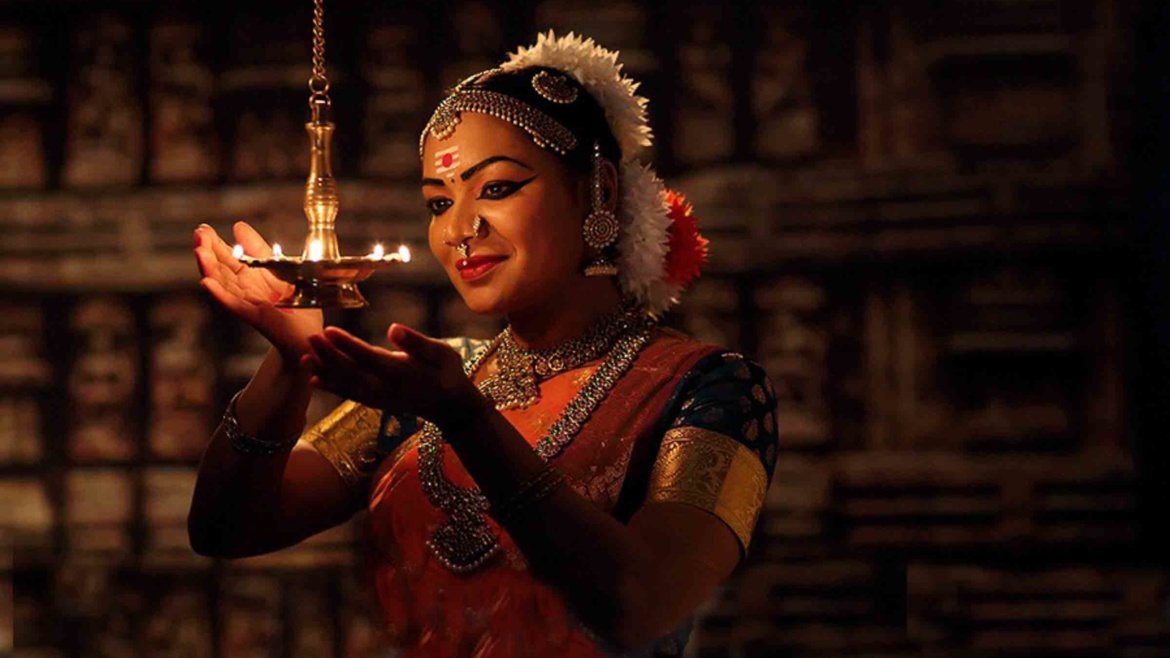
Bharatnatyam Dance is considered to be over 2000 years old. Several texts beginning with Bharata Muni’s Natya Shastra (200 B.C.E. to 200 C.E.) provide information on this dance form. The Abhinaya Darpana by Nandikesvara is one of the main sources of textual material, for the study of the technique and grammar of body movement in Bharatnatyam Dance. There is also a great deal of visual evidence of this dance form in paintings and stone and metal sculptures of ancient times. On the gopurams of the Chidambaram temple, one can see a series of Bharatnatyam poses, frozen in stone as it were, by the sculptor. In many other temples, the charis and karanas of the dance are represented in sculpture and one can make a study of the dance form.
Bharatnatyam dance is known to be ekaharya, where one dancer takes on many roles in a single performance. In the early 19th century, the famous Tanjore Quartette, under the patronage of Raja Serfoji are said to have been responsible for the repertoire of Bharatnatyam dance as we see it today.
The style was kept alive by the devadasis, who were young girls ‘gifted’ by their parents to the temples and who were married to the gods. The devadasisperformed music and dance as offerings to the deities, in the temple courtyards. Some of the renowned performers and gurus of the early part of the century belong to the devadasi families, a well-known name is Bala Sarasvathi
The repertoire of Bharatnatyam is extensive, however, a performance follows a regular pattern. At first there is an invocation song. The first dance item is the alarippu, literally meaning – to adorn with flowers. It is an abstract piece combining pure dance with the recitation of sound syllables.
பரதநாட்டியம் ஓர் அறிமுகம்
பரதநாட்டிய நடனம் 2000 ஆண்டுகளுக்கும் மேலானது என்று கருதப்படுகிறது. பரத முனியின் நாட்ய சாஸ்திரத்தில் தொடங்கி பல நூல்கள் இந்த நடன வடிவத்தைப் பற்றிய தகவல்களை வழங்குகின்றன. நந்திகேஸ்வரரின் அபிநய தர்பனம், பரதநாட்டிய நடனத்தில் உடல் இயக்கத்தின் நுட்பத்தையும் இலக்கணத்தையும் ஆய்வு செய்வதற்காக உரைப்பொருளின் முக்கிய ஆதாரங்களில் ஒன்றாகும். பண்டைய காலத்தின் ஓவியங்கள் மற்றும் கல் மற்றும் உலோக சிற்பங்களில் இந்த நடன வடிவத்தின் காட்சி ஆதாரங்கள் ஏராளமாக உள்ளன. சிதம்பரம் கோயிலின் கோபுரங்களில், சிற்பியால் பரதநாட்டியம் கரண சிற்பங்கள் கல்லில் உறைந்திருப்பதைக் காணலாம். பல கோயில்களில், நடனத்தின் கவர்ச்சியும் கரணங்களும் சிற்பத்தில் குறிப்பிடப்படுகின்றன,
பரதநாட்டியம் நடனம் எகஹார்யா என்று அறியப்படுகிறது, அங்கு ஒரு நடனக் கலைஞர் ஒரே நடிப்பில் பல வேடங்களில் நடிக்கிறார். 19 ஆம் நூற்றாண்டின் முற்பகுதியில், ராஜா செர்ஃபோஜியின் ஆதரவின் கீழ் புகழ்பெற்ற தஞ்சை சமஸ்தானத்தில் பரதநாட்டிய நடனத்தின் திறமைக்கு பெரும் ஆதரவு இருந்தது என்று நாம் பல ஆதாரங்கள் மூலமாக காண்கிறோம்.இந்த கலையை தேவதாசிகள் உயிரோடு வைத்திருந்தனர், அவர்கள் இளம் பெண்கள் தங்கள் பெற்றோர்களால் கோயில்களுக்கு அர்பணிக்கப்பட்டவர்கள்.மற்றும் கடவுள்களை மணந்தவர்கள். கோவில் முற்றங்களில், தெய்வங்களுக்கு பிரசாதமாக தேவதாசிஸ் இசை மற்றும் நடனம் நிகழ்த்தப்படும்.இந் நூற்றாண்டு முற்பகுதியில் புகழ்பெற்ற கலைஞர்கள் மற்றும் குருக்கள் சிலர் தேவதாசி குடும்பங்களைச் சேர்ந்தவர்கள், அதில் நன்கு அறியப்பட்ட பெயர் பாலா சரஸ்வதி.
பரதநாட்டியத்தின் திறமை விரிவானது, இருப்பினும், ஒரு செயல்திறன் வழக்கமான முறையைப் பின்பற்றுகிறது.இவற்றிற்கு பல படிமுறைகள் காணப்படுகின்றது.ஆரம்பகாலத்தில் இருந்து இன்று வரையில் பரதநாட்டியமானது பல மாற்றங்களை கண்டாலும் அதன் அழகும் நேர்த்தியும் மாறாமல் பாதுகாக்கவேண்டியது நடனகலைஞர்களின் கடமை ஆகும்.
3 Comments
Rupan
website looking great….nice write-ups..good luck
Vyshnavi
Useful informations 👌🏻 keep going
kishanyrupan
Thank you